

The Cost of Living in Lexington, Kentucky
In recent months, the topics of housing and liveability have become polarizing for many Lexingtonians.
The cost of housing was one of the leading factors in the Urban County Council’s decision to expand the Urban Services Boundary by between 2,700-5,000 acres — with some elected officials and advocacy groups claiming that opening up more rural land for development would decrease the cost of housing.
-
Important: No data or research was ever presented to substantiate their decision.
Yes, housing prices are rising in Lexington, but not as much as in similarly sized cities across the country. At least, that’s what our data shows.
- Question: What does the data tell us about how Lexington compares, and what questions do we need to ask to come to real solutions about how to address these rising costs?
Rental Units
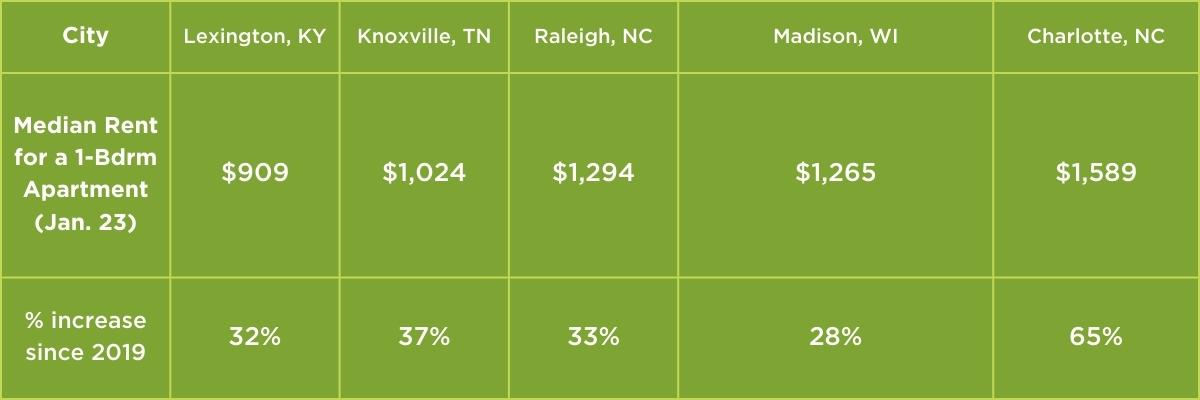
Sources:
Owner-Occupied Units
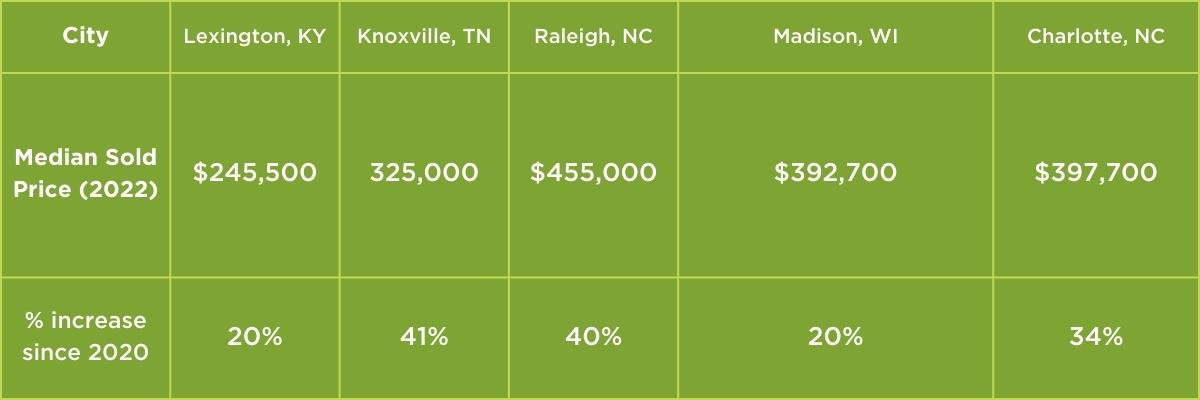
Source: National Association of Realtors
Transportation
Transportation expenses are a combination of auto ownership, maintenance and use, as well as public transportation.
-
Important: While often not considered as part of the cost of housing, transportation costs are the second largest expense for renters and homeowners.
The more car-dependent a city, and the farther housing is built from existing businesses, jobs, and services, the higher the cost of living will be. That’s why building a compact, walkable city is key for lowering the cost of both housing and transportation.
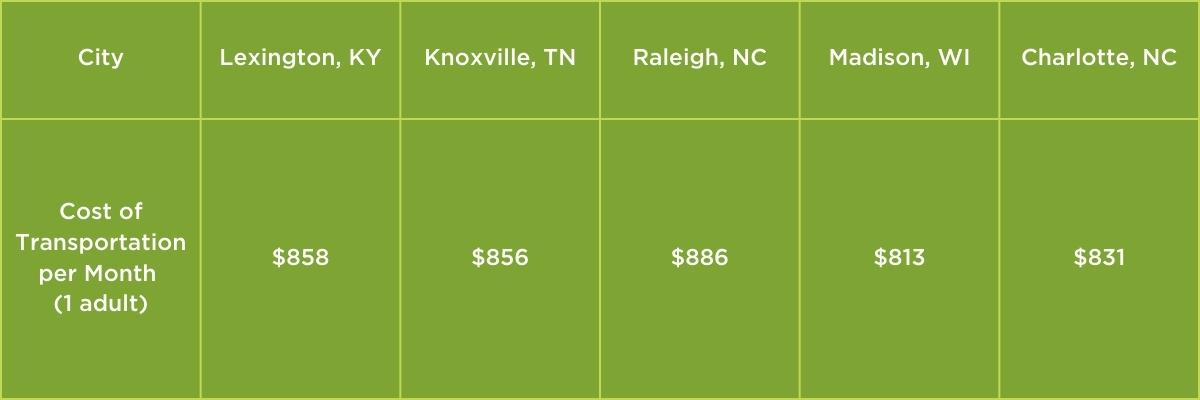
Source: Economic Policy Institute
Conclusion
We believe this data shows us that Lexington, Kentucky remains an affordable city to live in despite the rising cost of housing and inflation nationwide, and an even more affordable city than its regional counterparts. However, Lexington’s focus on expanding the Urban Services Area as a solution to more affordable housing has prevented it from implementing solutions that have proven to be more impactful in other cities. It is key to learn from other policy changes and efforts to help create more solutions to the cost of housing challenges.
Combatting the Rising Cost of Housing
Lexington created the Affordable Housing Trust Fund in 2014, allocating approximately $2M to the fund per year.
-
Important: The city is currently contemplating increasing its annual funding for this program.
Additionally, numerous Zoning Ordinance Text Amendments have been passed to encourage more housing and better utilization of land inside the USB.
-
Yes, but: Other cities have taken aggressive, proactive measures to make their cities more liveable, efforts Lexington should review and consider to create real solutions.
Examples
-
New Orleans has worked directly with the Choice Neighborhoods program to revitalize blighted, historical neighborhoods.
-
Minneapolis, MN, and Arlington, VA have rezoned portions of their city that lie close to public transit hubs to eliminate single-family housing. Minneapolis’ 2040 Comprehensive Plan also promotes increased equity in housing by boosting density throughout the city, including the elimination of single-family zoning.
-
Wichita, KS rezoned Industrial areas to allow modern, mixed-use, high-density development.
-
Phoenix, AZ has adopted an Infill Housing Program that provides development fee waivers, assistance with off-site improvements, and expedited review processes for qualifying infill housing projects.
-
The state of Massachusetts requires cities and towns to allow multifamily housing near transit stations by right, with a minimum density of 15 units per acre.
Author
This article was researched by Jenna Muschong and co-written by Jenna Muschong and Fayette Alliance.