

Candidate Questionnaire, Whitney Baxter
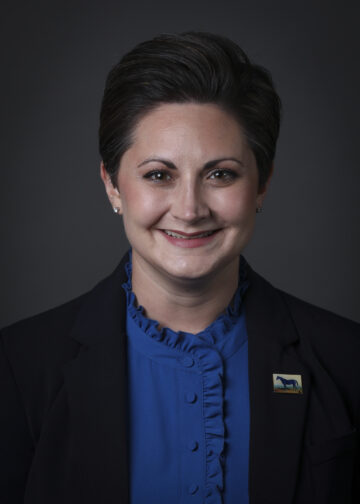
Whitney Baxter (incumbent)
Whitney Baxter is the current Councilmember of District 9 in Lexington-Fayette County.
Transit
Land use policy and public transit are closely linked. How do you think Lexington can prioritize transit oriented development moving forward and what strategies do you support to improve our city’s public transit system?
- Answer:
I think we have done a great job expanding our relationship with Lextran in recent years. We have worked together to bring several pilot projects to the community and we are investing in public transit. Prioritizing transit oriented development may be a little more cumbersome if Lextran can’t service the growing need due to driver shortages, bus inventory levels and fiscal constraints. Alternatively, increasing Lextran resources is not responsible if community members don’t increase their usage of public transportation. What we can do is continue to focus development along the corridors that are currently being serviced by public transportation. Building a denser footprint at our city’s core and along major corridors will not only ensure that our vacant and underutilized land is being put to its highest and best use, it will protect us from urban sprawl. I think continuing to expand our bus routes into neighborhoods will improve the overall transportation network as well.
Downtown Area Master Plan
LFUCG recently adopted a new Downtown Area Master Plan. As the community works to increase the vibrancy of our downtown while also creating new housing opportunities, which implementation items from the Plan would you like to see prioritized and why?
- Answer:
Our new Downtown Area Master Plan is the result of months of hard work by LFUCG Staff and numerous community members who engaged with the study along the way. Overall, I am pleased with the plan and its vision for Downtown Lexington. There are several areas I think should be prioritized. First focus on the people who currently live or wish to live downtown. What do they need? Diverse and affordable housing that is close to grocery stores, drug stores, and other everyday life amenities. Next, look at the business community. What are they lacking? Access to healthy quick service meals and retail options that would help make their day more productive. Finally, our visitors. What things do I love when I travel to other cities? I love the local art, the undeniable character, and the people I meet. We accomplish these goals by diversifying our downtown housing stock with multi-use, mixed income development that incorporates a broad variety of retail. When we bring people downtown permanently, we create a downtown that is active beyond traditional business hours—a place where people can live, work, shop, dine, gather, and build community. Prioritizing the basics will make this plan a success. A success measured not only by how much new development occurs, but by whether downtown becomes a more vibrant and accessible place for those who visit and those who call Lexington home.
Data Centers
Lexington currently has a moratorium on data centers until October 31, 2026. How do you think Lexington should address the growing demand for data centers?
- Answer:
First and foremost we need to define what a hyperscale data center is for our community and permanently ban any data center of that size or larger in Lexington-Fayette County. We simply cannot accommodate their operation and our community does not want them here. Then we need to determine what industries are currently operating data centers here and how we can ensure they continue to operate going forward. Supporting telecommunications, medical record retention, clinical research, educational data, and banking are all important areas that I support preserving local data retention instead of that data being stored out of state or country. Data centers have operated safely and discreetly for years in our community and it is my intention to set realistic restrictions to allow continued operation of pre-existing uses while protecting our identity. The recently proposed moratorium will give us the time we need to draft meaningful legislation to protect our values all while promoting economic development.
Renewable Energy
What policies would you support to increase urban renewable energy development, like commercial and industrial rooftop solar, in Lexington-Fayette County’s built environment?
- Answer:
Increased urban renewable energy development is an important component as we work toward our goal of carbon neutrality in Lexington-Fayette County. I would support the council potentially expanding the city’s Public Infrastructure Fund to include the installation of solar panels on new development or redevelopment projects.
As enrollment at the University of Kentucky expands, Lexington neighborhoods are feeling the pressure of increased demand for student housing. What growth strategies would you support to balance the need for student housing with the concerns of longtime residents?
Student Housing
As enrollment at the University of Kentucky expands, Lexington neighborhoods are feeling the pressure of increased demand for student housing. What growth strategies would you support to balance the need for student housing with the concerns of longtime residents?
- Answer:
As referenced in our new Downtown Master Plan, supporting student-oriented housing near campuses is important, but I would like to see a few changes. I would like to see workforce housing incorporated into the housing boom around UK’s campus. Students are only students for a short amount of time and while they are valued residents while they are in school, they are equally as valuable in the workforce. Developing step-up housing for those students who are entering the workforce will ease the transition while adding valuable housing stock to the market. This should be done carefully and sensitively though. Close proximity to campus does not necessarily have to mean it has to be within walking distance. I would like to see student and workforce housing brought down Nicholasville Road and into the more commercial business areas. While the corridor definitely does not need more traffic, we can promote and utilize the robust public transportation network that already exists on this corridor to get students and employees to and from campus and the downtown area without adding more cars, especially if a Bus Rapid Transit line is added in the future.
Urban Service Boundary
Lexington’s historic and productive agricultural lands feel more pressure each year for development of all kinds. Why do you think it is important to protect our Rural Service Area, and what policies do you support (in addition to the PDR program, vital for conservation) or would you like to see implemented to continue safeguarding it?
- Answer:
Protecting our Rural Service Area is important for several reasons. Not only is our Rural Service Area the foundation and fabric of our community, it is imperative to our economy in Fayette County. Without the annual $2.6 Billion economic impact of our Rural Service Area, we would be crippled as a community. The Rural Service Area cannot be treated as an all-you-can-eat buffet of future development sites, it is precious and finite and we must protect it. I supported the expansion of the PDR program to include small farms and would support further flexibility to allow other rural lands to be included. I was also happy to support Lexington’s Preservation & Growth Management Program that will evaluate potential future expansions of the Urban Service Area. It’s important to have a data driven process to inform us in the future. I have been researching how other communities preserve land and have found a few interesting models in the state of Washington that I will continue to look into. I will continue to fight against industrial uses on agricultural land.